It’s been a long time since I sat down to write a blog post like this. Why did I open my computer this morning and log in to WordPress? Somewhat to my surprise, a few people who saw I had been to Delhi, India, for the AI Impact Summit asked me if I would report out on what I saw. One was my longtime friend and correspondent, Dave Winer, who sent me a note to say it would make a good blog post. Well, Dave is among the “godparents” of blogging, if not THE “godparent” (and of podcasting, too — see the Wikipedia entry on the history of podcasting), so if he thinks it would be a good blog post then maybe I should listen…
I work now at MacArthur Foundation, and we have an office in Delhi, India. We’ve been there for 31 years. We’ve worked on issues ranging from global health and population issues to girls’ education to indigenous self-determination to climate. We haven’t done a ton on technology and the public interest in India, but we are supporting a few grantees in this area in India and have a robust program in other parts of the world. So we are on the look-out for whether AI and the public interest is a field where we can help make a difference in India. That’s context for our visit.
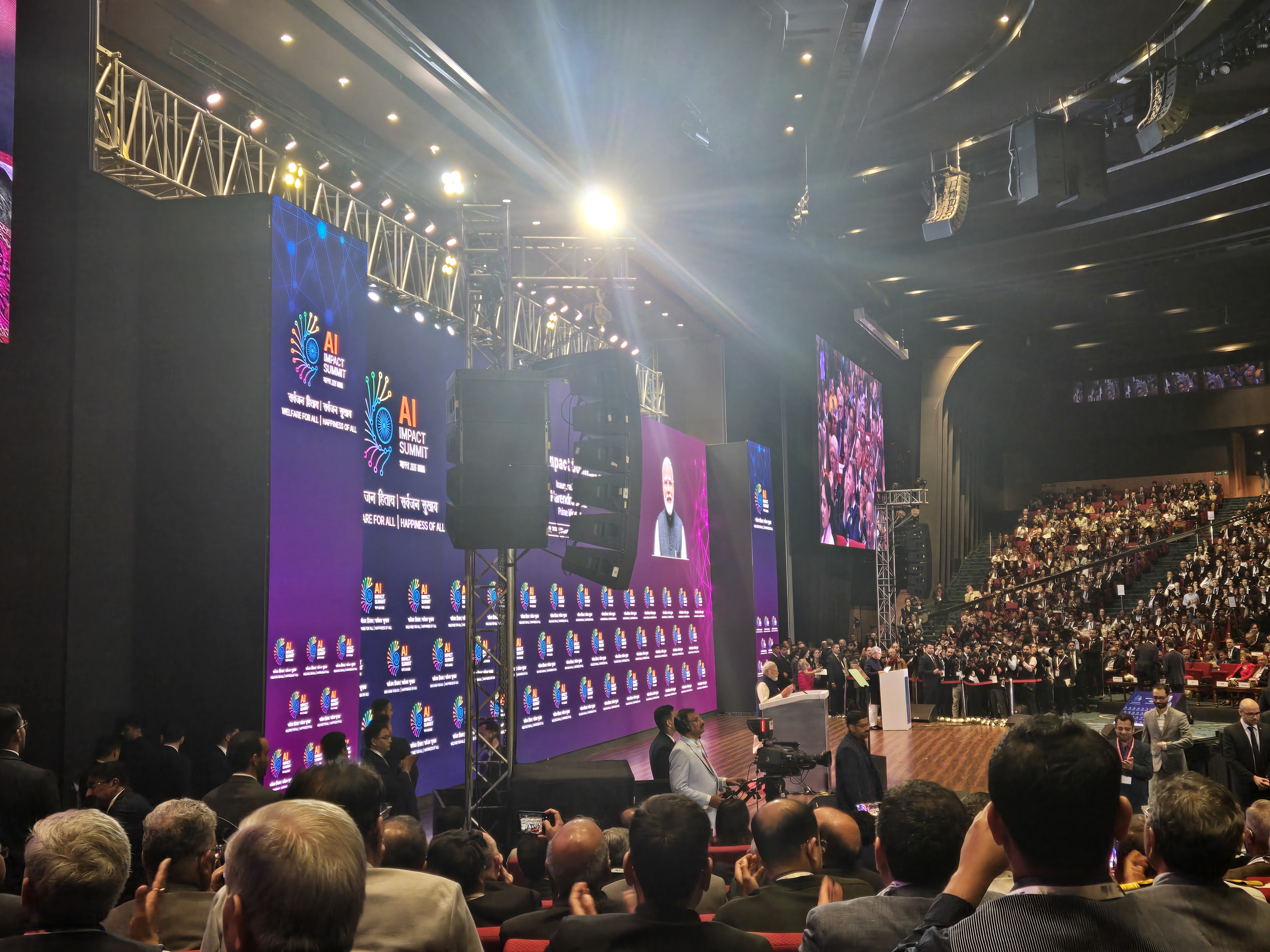
The AI Action Summit in 2026 was a big deal. For one, its presence in India — a part of the Global Majority, or the Global South, or Developing World, depending on one’s preferred nomenclature — was itself a first. The previous AI Action Summits have taken place in the UK (Bletchley Park, 2023); South Korea (Seoul, 2024); and France (Paris, 2025). At the Paris Summit, PM Modi committed to hosting the next summit and he pulled it off in Delhi. In and of itself, this is a positive step. (The next one has been claimed by Switzerland — back to Europe).
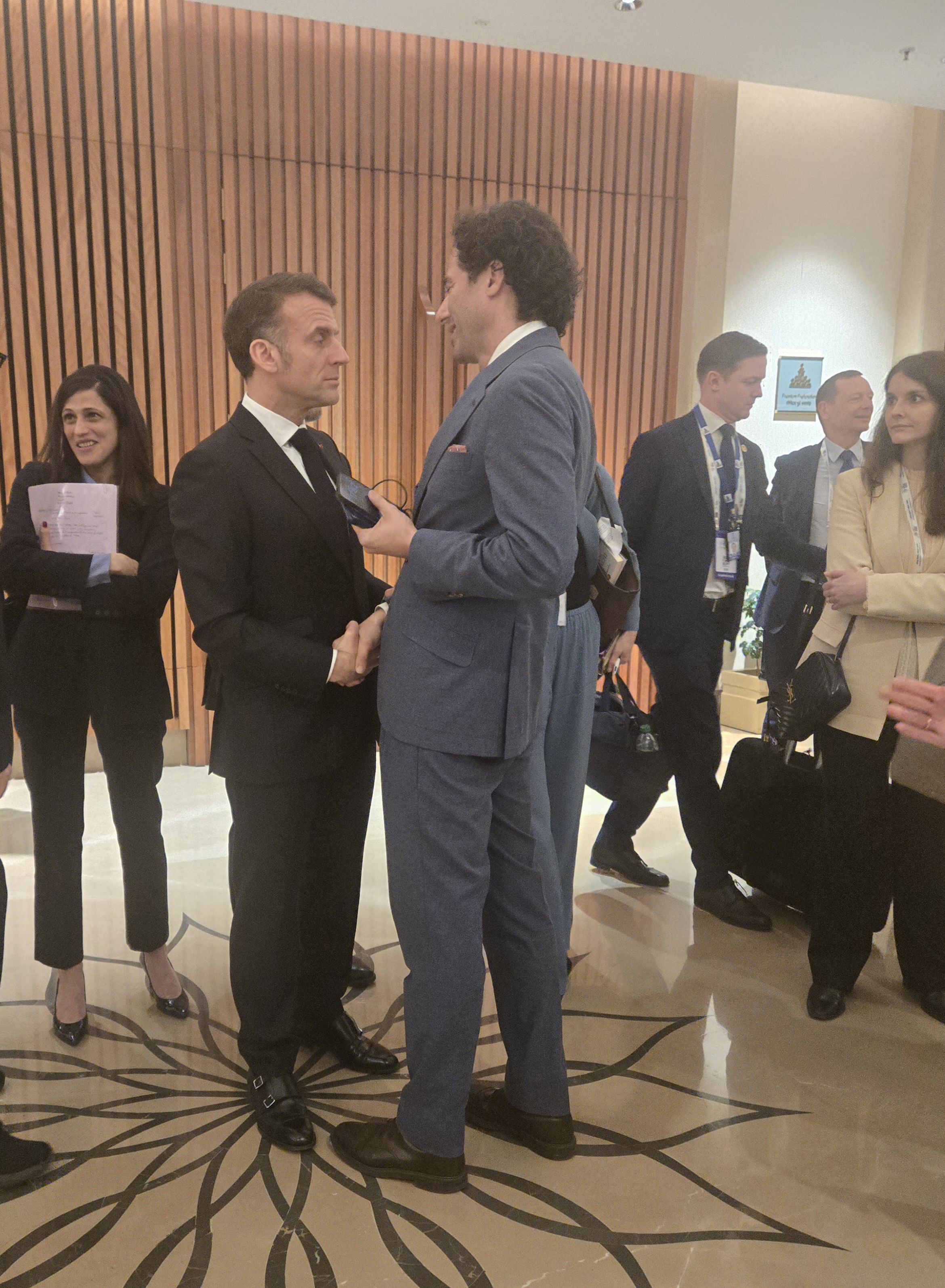
The feel of the event was very different from Paris, which I also attended. Of course Delhi and Paris are very different cities. The French hosted the event in the Grand Palais and surrounding venues. It was very beautiful and stately, and there are many things to commend about how they hosted us as guests and delegates. But it was relatively small in attendance by comparison: in the key sessions, it felt like there were hundreds of people in the room. In Delhi, the big sessions had thousands. And the man who ran the event told me that more than a million people, mostly from India, had passed through the gates of the massive convention center during the week.
This may sound symbolic but I think it is an important symbol: that AI is about and for all humanity. It is not something that is magical and only to be shaped by wizards. It is a technology that is general — it touches everyone on the planet one way or another, already, with implications for nearly every aspect of human life. I’m not hyping it up; I think this is fact at this stage. The Internet was the same way, sort of, but I think AI will prove another step more consequential.
Second big point: the rhetoric was about AI and inclusion of this large majority of people. In previous AI policy settings, issues of existential risk or innovation or the AI arms race were dominant frames. Now, I am biased: at MacArthur Foundation, our investments are very much geared toward economic and social inclusion through this new technology for all humanity. We see it as an important way to provide opportunity for all. I think especially about the young people just coming into the workforce: can they have more agency, not less, in a world of AI? And can we help shape that? Rather than have AI destroy our climate and our communities with hulking power and data centers, can the technology be used to address and bring about climate solutions?
As of right now, I don’t think anything is predetermined about how AI will play out. We have a chance to shape it, still, and philanthropy has a role to play in encouraging many more voices, especially from civil society and academia and ordinary people, into the debate. From that standpoint, I thought the sight of many ordinary (by which I mean, non-expert) people wandering through the Delhi AI Action summit was a beautiful thing to behold.
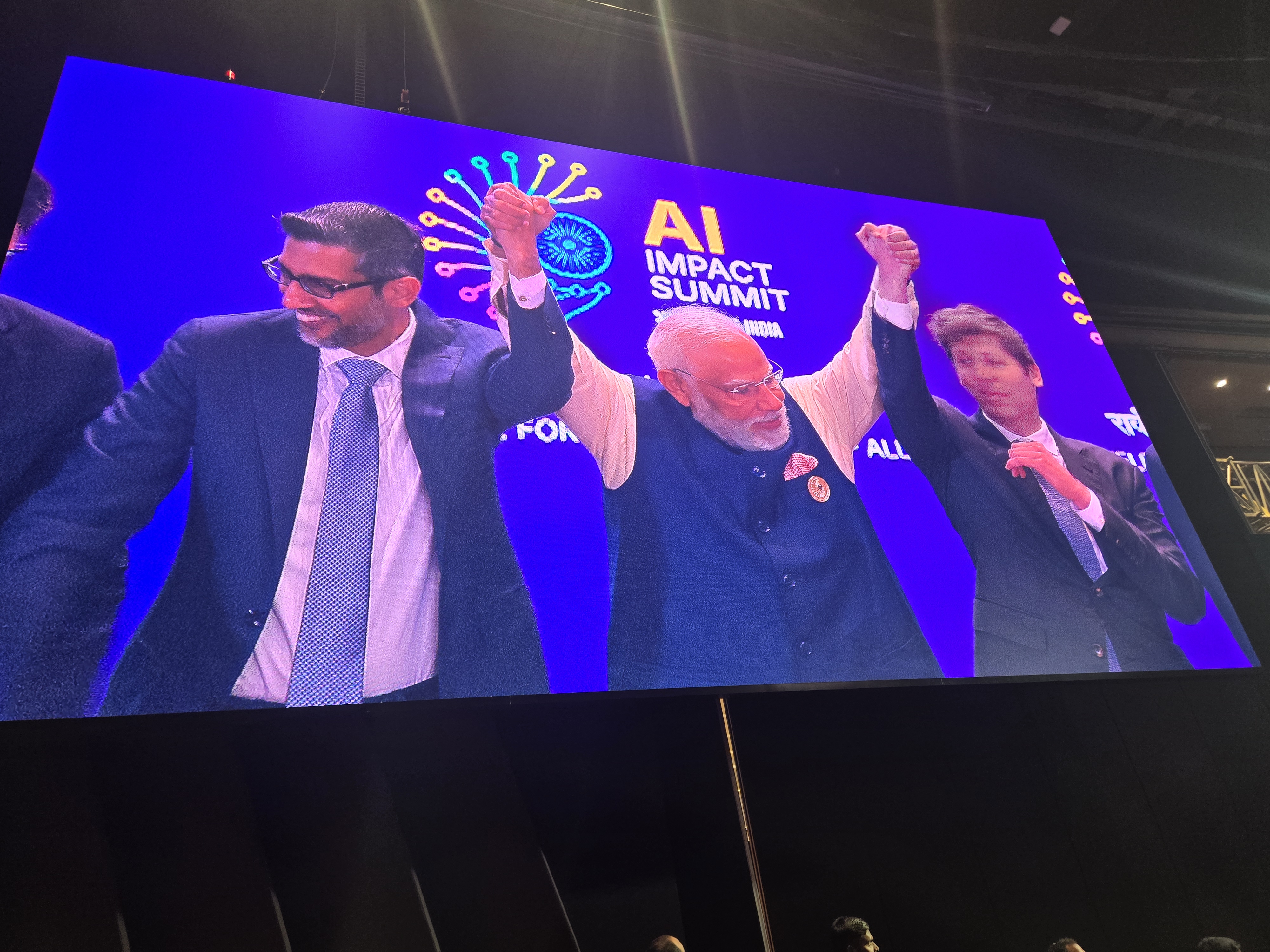
In the gossipy category: there was of course the slightly comical moment when two tech titans couldn’t bear to hold hands as a chorus line of tech leaders were meant to raise them together with their host on stage. Oh well.
One other note, in the “can’t let it go” category: there’s an odd governance vacuum related to these AI Action Summits: (1) who actually decides who hosts the next one? Did India just claim it and announce it? Did the Swiss just claim it and announce that they would host the next one? It is an oddly ambiguous situation. A little governance and clarity could go a long way. (2) When companies make voluntary pledges, as they have at each of the summits I believe, or at least most, is someone tracking those? How can we as societies implement an accountability system? These stakes are very, very high for how AI develops globally. I think we should have answers to these and other questions.
So, thanks, Dave, for the prompt. Hope this is of at least a modicum of interest to someone out there!
 John Palfrey